











Mandav (Mandu) – The City of Joy
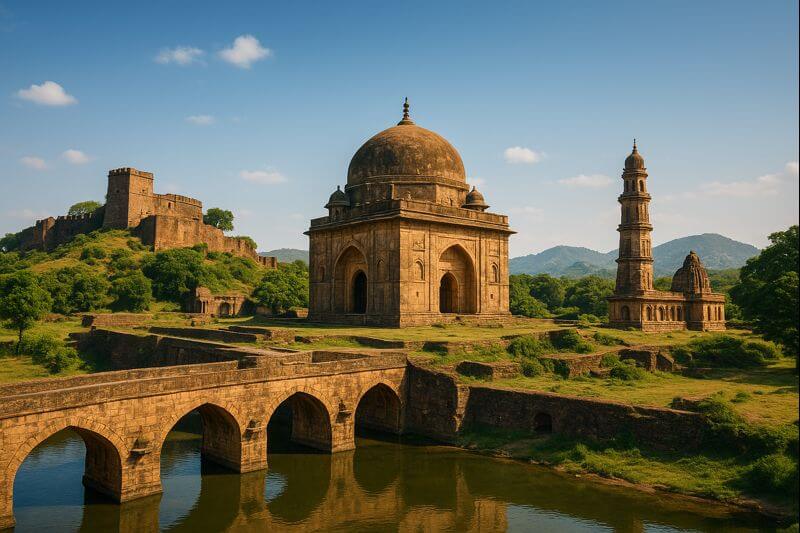
Mandu, also known as Mandav or Mandavgarh, is a historic hill town located in Dhar district of Madhya Pradesh. Famous for its grand forts, Afghan architecture, romantic legends, and scenic landscapes, Mandu is one of the most beautiful heritage destinations in central India. Surrounded by the Vindhya ranges, this ancient city attracts history lovers, photographers, and travelers seeking peace and culture.
History of Mandav (Mandu): The Glorious Past of a Hilltop Capital
Mandav, commonly known as Mandu, is a historic fortified city located in the Dhar district of Madhya Pradesh. Perched on the Vindhya ranges at an altitude of about 2,000 feet, Mandav has witnessed the rise and fall of powerful dynasties. Its magnificent forts, palaces, mosques, and tombs narrate stories of royal ambition, romance, art, and architectural excellence.
Early History and Paramara Rule
The origins of Mandav can be traced back to the 10th century, when it was known as Mandapadurga or Mandapika. The region was initially ruled by the Paramara dynasty, whose capital was Dhar. Mandav served as a strategic military outpost due to its natural defenses, steep cliffs, and commanding views of the surrounding plains.
Mandav under the Delhi Sultanate
In the early 14th century, Mandav came under the control of Alauddin Khilji of the Delhi Sultanate. Recognizing its strategic importance, the rulers strengthened its fortifications and expanded the city. Mandav soon became an important administrative and military center in central India.
Golden Age: Capital of the Malwa Sultanate
The true golden era of Mandav began in 1401, when Dilawar Khan Ghori declared independence from Delhi and founded the Malwa Sultanate. Mandav was chosen as the capital due to its secure location and pleasant climate.
Reign of Hoshang Shah
Under Sultan Hoshang Shah, Mandav flourished as a center of art and architecture. His reign saw the construction of iconic monuments such as:
- Hoshang Shah’s Tomb (India’s first marble mausoleum)
- Jami Masjid, inspired by the Great Mosque of Damascus
These structures laid the foundation for Indo-Islamic architecture in India.
Architectural Brilliance under Mahmud Khilji
Mahmud Khilji, one of Mandav’s most powerful rulers, transformed the city into a grand imperial capital. Massive gateways, palaces, and public buildings were constructed, showcasing Afghan architectural style combined with Indian craftsmanship.
Monuments like Jahaz Mahal and Hindola Mahal date back to this period and reflect Mandav’s luxurious royal life.
Romance of Baz Bahadur and Rani Roopmati
The most legendary chapter in Mandav’s history belongs to Baz Bahadur, the last independent ruler of Malwa, and Rani Roopmati, a poet-singer queen. Their love story has become a symbol of romance and tragedy.
- Baz Bahadur’s Palace and Rani Roopmati Pavilion still stand as reminders of their love.
- Their story ended with the invasion of Mughal emperor Akbar, leading to the fall of Mandav in 1561.
Mughal Period and Decline
After Akbar’s conquest, Mandav lost its political importance. The Mughal rulers shifted their focus to more accessible regions, leading to gradual neglect. Over time, Mandav’s grand buildings turned into ruins, slowly being reclaimed by nature.
Mandav in the Modern Era
During British rule, Mandav remained largely abandoned. However, its historical value was later recognized, and efforts were made to preserve its monuments. Today, Mandav is protected by the Archaeological Survey of India (ASI) and is promoted as a major heritage tourism destination in Madhya Pradesh.
Legacy of Mandav
Mandav stands as a living museum of medieval India, showcasing:
- Afghan-Islamic architecture
- Royal love stories
- Strategic fort planning
- Cultural and artistic excellence
Its peaceful ruins, scenic beauty, and rich history continue to attract historians, travelers, photographers, and architecture lovers from around the world.
Mandav Fort – A Living Heritage
The Mandu Fort is one of the largest fort complexes in India, stretching over several kilometers. Built with massive stone walls and gateways, the fort encloses palaces, mosques, water reservoirs, and pavilions that reflect Indo-Afghan architectural brilliance.
Walking through Mandu feels like exploring an open-air museum filled with stories of royal grandeur and timeless beauty.
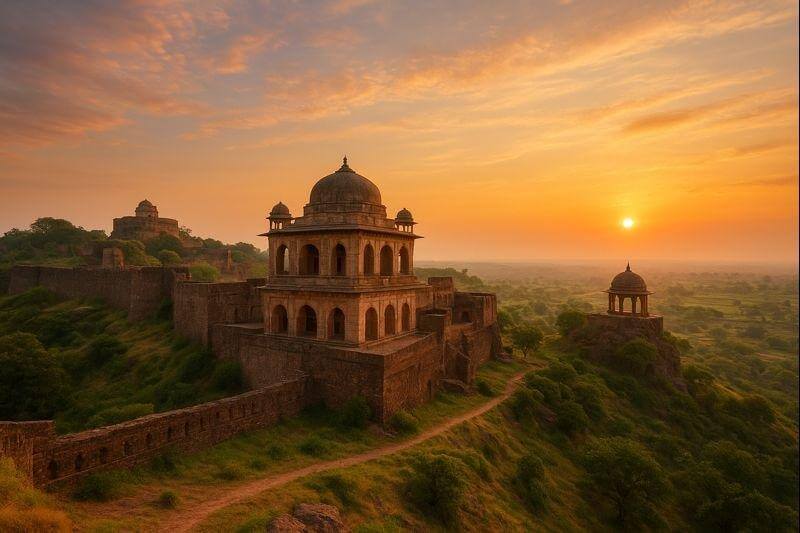
Best Time to Visit Mandav
The best time to visit Mandav (Mandu) is from October to March, when the weather is pleasant and ideal for sightseeing, photography, and exploring historical monuments.
October to March – Peak Season (Best Time)
- Weather: Cool and comfortable (10°C to 25°C)
- Why visit: Perfect for walking through forts, palaces, and viewpoints
- Highlights: Clear skies, pleasant evenings, ideal for heritage tours
- Best for: Families, couples, photographers, history lovers
July to September – Monsoon Season (Very Beautiful)
- Weather: Moderate rainfall, lush greenery
- Why visit: Mandav looks stunning with waterfalls, misty hills, and fresh landscapes
- Note: Some paths may be slippery, but views are breathtaking
- Best for: Nature lovers, photographers
April to June – Summer Season (Not Recommended)
- Weather: Hot (up to 40°C)
- Why avoid: Harsh heat makes outdoor sightseeing uncomfortable
- Tip: If visiting in summer, explore early morning or late evening only
Best Month Recommendation
- November to February – Most comfortable weather and best overall experience
How to Reach Mandav
- By Air: The nearest airport is Devi Ahilya Bai Holkar Airport, Indore (around 100 km).
- By Train: The nearest railway station is Ratlam or Indore.
- By Road: Mandu is well-connected by road from Indore, Dhar, and Ujjain.
Famous Monuments in Mandav
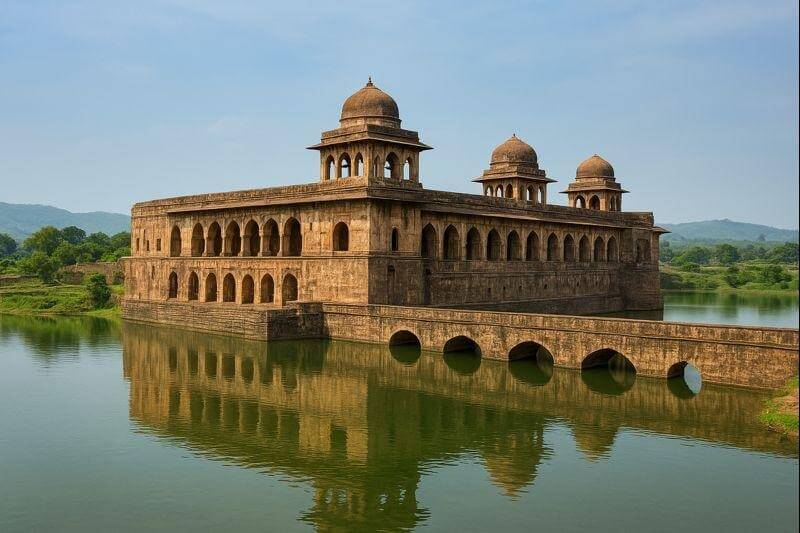
Jahaz Mahal
One of the most iconic structures in Mandu, Jahaz Mahal (Ship Palace) appears like a floating ship between two artificial lakes, Munj Talao and Kapur Talao. It was built by Sultan Ghiyas-ud-din Khilji and is admired for its elegant arches and airy corridors.
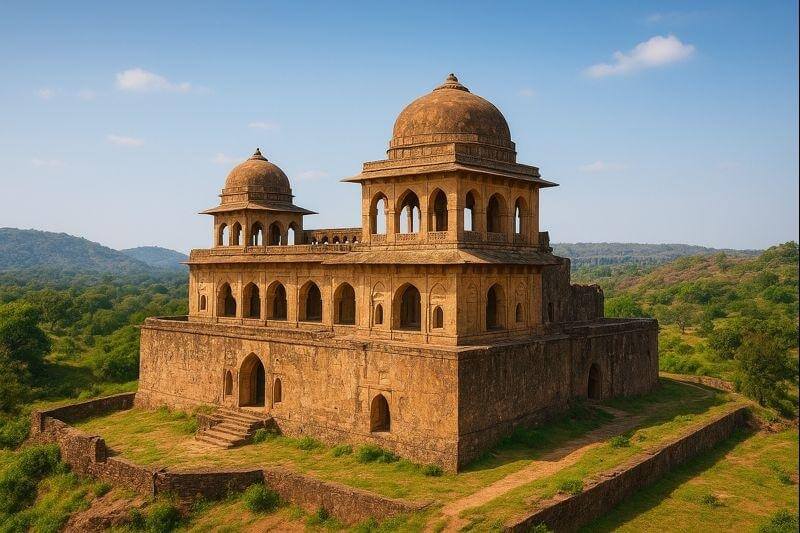
Rani Roopmati Pavilion
Perched on a hilltop, the Rani Roopmati Pavilion offers breathtaking views of the Narmada valley. This monument is closely associated with the romantic tale of Rani Roopmati and Baz Bahadur.
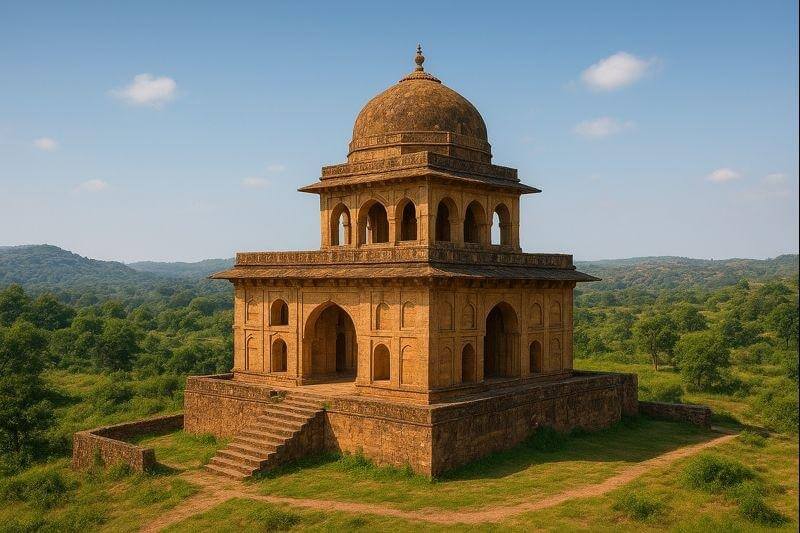
Baz Bahadur’s Palace
This palace reflects a blend of Rajput and Mughal architectural styles. It served as the residence of Baz Bahadur and stands as a symbol of Mandu’s artistic heritage.
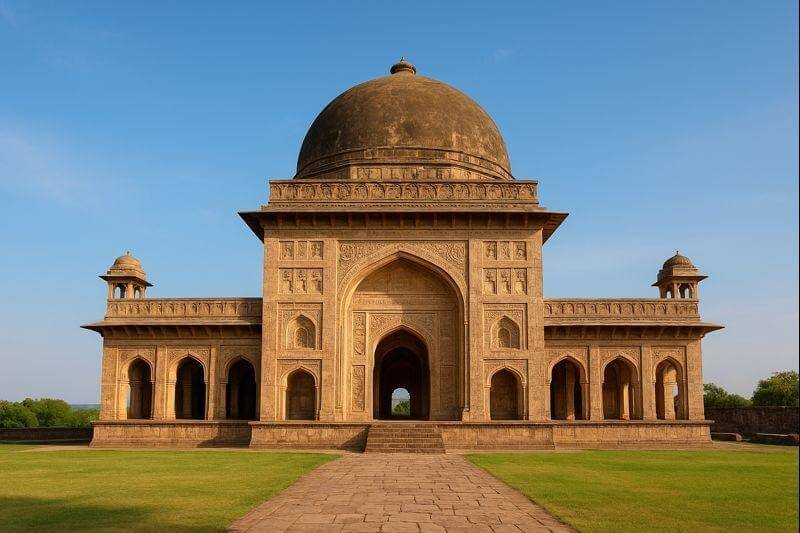
Hoshang Shah’s Tomb
Considered one of the earliest examples of marble architecture in India, Hoshang Shah’s Tomb is said to have inspired the design of the Taj Mahal. Its symmetrical design and marble dome make it a must-visit site.
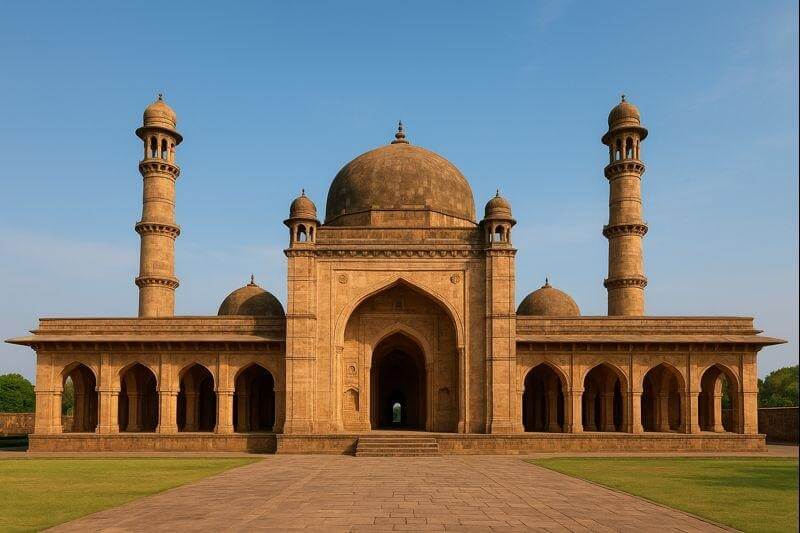
Jami Masjid
The Jami Masjid in Mandu is a grand mosque inspired by the Great Mosque of Damascus. It showcases impressive domes, spacious courtyards, and elegant arches.
Things to Do in Mandu
- Explore ancient monuments and ruins
- Enjoy sunset views from Rani Roopmati Pavilion
- Photography of heritage architecture and landscapes
- Learn about Malwa history and legends
- Take peaceful walks amidst nature and ruins
Why Visit Mandu?
Mandu is perfect for travelers looking for history, romance, architecture, and natural beauty. Unlike crowded tourist destinations, Mandu offers a peaceful and immersive heritage experience. Its monuments, legends, and scenic surroundings make it a must-visit destination in Madhya Pradesh.
Best Places to Stay in Mandav
1. Malwa Retreat, Mandav (MP Tourism)
Best for: Comfortable stay, scenic views
- Managed by Madhya Pradesh Tourism
- Located near Jahaz Mahal
- Spacious rooms, gardens, restaurant
Ideal for: Families, couples, first-time visitors
2. Mandu Sarai (MP Tourism)
Best for: Budget travelers
- Affordable and clean rooms
- Peaceful location close to monuments
Ideal for: Solo travelers, backpackers
3. Hotel Royal Palace Mandu
Best for: Budget to mid-range stay
- Close to Jahaz Mahal and Hindola Mahal
- Basic amenities, good location
Ideal for: Short stays, sightseeing trips
4. Heritage Homestays in Mandu
Best for: Local experience
- Warm hospitality and traditional food
- Limited availability
Ideal for: Culture lovers, slow travelers
Luxury & Heritage Stay (Nearby)
5. Ahilya Fort Heritage Hotel (Maheshwar – ~40 km)
Best for: Luxury heritage experience
- Riverside fort palace
- Royal interiors and premium service
Ideal for: Luxury travelers, honeymooners
6. Indore Hotels (Approx. 100 km)
If you prefer modern amenities, staying in Indore is a good option with many premium hotels and easy road connectivity.
Best Area to Stay in Mandav
- Near Jahaz Mahal
- Around Malwa Retreat
- Close to main Mandu road
Conclusion
The history of Mandav is a captivating journey through time — from ancient dynasties and powerful sultans to romantic legends and imperial decline. Every monument in Mandav whispers stories of its glorious past, making it one of the most fascinating historical destinations in India.
Travel Guidelines for Mandav (Mandu)
Mandav is a protected heritage destination, so following basic guidelines helps preserve its monuments and ensures a safe and enjoyable visit.
Monument & Heritage Guidelines
- Do not touch, climb, or deface monuments
- No writing or scratching on walls or pillars
- Photography is allowed, but avoid drones without permission
- Follow instructions given by ASI authorities
Visitor Safety Guidelines
- Wear comfortable walking shoes (uneven stone paths)
- Carry water, sunscreen, and a hat, especially in summer
- Avoid isolated areas after sunset
- Travel in groups if visiting remote monuments
Environmental Guidelines
- Do not litter inside or around monuments
- Use dustbins; carry back plastic waste
- Avoid disturbing plants, birds, or wildlife
- Do not play loud music in heritage zones
Cultural & Religious Guidelines
- Dress modestly, especially near mosques and tombs
- Maintain silence and respect inside religious structures
- Remove footwear if required at certain places
Photography Guidelines
- Personal photography is allowed
- Tripods may require permission
- Commercial shoots need official approval
- Avoid flash photography inside interiors
Travel & Transport Guidelines
- Drive carefully on hill roads and curves
- Parking is allowed only in designated areas
- Follow local traffic rules
- Fuel stations are limited—plan accordingly
Best Visiting Time Guidelines
- Visit monuments between 8:00 AM – 6:00 PM
- Early morning and sunset are ideal for sightseeing
- Avoid midday visits during summer
Stay & Booking Guidelines
- Book hotels in advance during peak season (Oct–Feb)
- MP Tourism hotels are safest and well-located
- Carry ID proof for hotel check-in
Emergency & Health Tips
- Carry basic medicines and first-aid
- Mobile network may be weak in some areas
- Nearest major medical facilities are in Dhar or Indore
FAQs About Mandav (Mandu), Madhya Pradesh
1. Where is Mandav (Mandu) located?
Mandav, also known as Mandu, is located in the Dhar district of Madhya Pradesh, around 100 km from Indore. It is situated on the Vindhya ranges at a height of about 2,000 feet.
2. What is Mandav famous for?
Mandav is famous for its historic forts, palaces, mosques, tombs, and romantic legends. Major attractions include Jahaz Mahal, Rani Roopmati Pavilion, Baz Bahadur’s Palace, Jami Masjid, and Hoshang Shah’s Tomb.
3. What is the best time to visit Mandav?
The best time to visit Mandav is October to March, when the weather is pleasant for sightseeing. The monsoon season (July–September) is also beautiful due to lush greenery.
4. How many days are enough to visit Mandav?
1 to 2 days are sufficient to explore Mandav’s main attractions. If you enjoy photography or heritage walks, a 2-day trip is ideal.
5. How can I reach Mandav?
By Road: Well connected from Indore and Dhar
By Rail: Nearest railway station is Ratlam Junction
By Air: Nearest airport is Indore Airport
6. Is Mandav safe for tourists?
Yes, Mandav is safe for tourists, including solo travelers and families. However, it is advisable to avoid isolated areas after sunset and follow basic travel precautions.
7. Are guides available in Mandav?
Yes, local guides are available near major monuments and MP Tourism offices. Hiring a guide helps in understanding Mandav’s rich history better.
8. Is photography allowed in Mandav?
Yes, photography is allowed at most monuments. However, commercial photography and drone usage require permission from authorities.
9. What are the entry fees for Mandav monuments?
Most monuments have a nominal ASI entry fee. Prices may vary for Indian and foreign tourists. Some sites may be free.
10. Where can I stay in Mandav?
Popular stay options include Malwa Retreat and Mandu Sarai (MP Tourism), along with budget hotels and homestays near Jahaz Mahal.
11. Are food options available in Mandav?
Yes, local restaurants and MP Tourism hotels serve Indian and regional Malwa cuisine. Options are limited, so carrying snacks is recommended.
12. Is Mandav suitable for family trips?
Yes, Mandav is a great destination for family trips, educational tours, and heritage travel.
13. What should I wear while visiting Mandav?
Wear comfortable clothing and walking shoes. Modest dressing is advised while visiting religious monuments.
14. Is Mandav good for photography?
Absolutely! Mandav is a photographer’s paradise, especially during sunrise, sunset, and monsoon season.
15. Can Mandav be visited in one day?
Yes, Mandav can be covered in one day, but an overnight stay allows a more relaxed and complete experience.
16. Are ATMs and mobile networks available?
ATMs and mobile networks are limited, so carry cash and inform someone before exploring remote areas.
17. Why should I visit Mandav?
Mandav offers a perfect blend of history, architecture, romance, and natural beauty, making it one of the most beautiful heritage destinations in Madhya Pradesh.