






Ship, sell or buy in Hawaii? How to decide what to do with your car
When planning a move to Hawaii, it is tempting to reduce the car decision to one question: is shipping worth it?
That question comes too early. First, ask whether the vehicle you already own is a good match for the life you expect to have after the move. Then compare the complete process of keeping it with the complete process of replacing it.
Shipping, selling and buying each create work, uncertainty and transportation gaps. A useful comparison makes those tradeoffs visible instead of treating one option as automatically sensible.
Describe your first ordinary week in Hawaii
Start with the trips you expect to make after the moving boxes are gone. Where will you work? Who needs transportation during the day? Will you carry children, work equipment or a relative who needs easier access?
If your housing is not settled, list what remains unknown. You may not yet know the parking arrangement, commute or whether one household vehicle will be enough.
Separate confirmed needs from the lifestyle you imagine. A car chosen for occasional outings may be inconvenient for your regular routine.
You do not need perfect information. You need enough to identify whether your current vehicle fits the likely job.
Evaluate the car you actually own
Make a factual inventory of your current vehicle. Record its mileage, recent repairs, maintenance due and any unresolved problem. Include practical details such as visibility, cargo space and ease of parking.
If you are uncertain about its condition, consider having a qualified mechanic evaluate it before you decide.
Knowing a car’s history is valuable, but familiarity is not the same as reliability. A vehicle you understand may still require work you do not want to manage during a relocation.
Conversely, an older car that meets your needs should not be dismissed
merely because moving makes a replacement feel like a fresh start.
Compare complete options, not isolated expenses
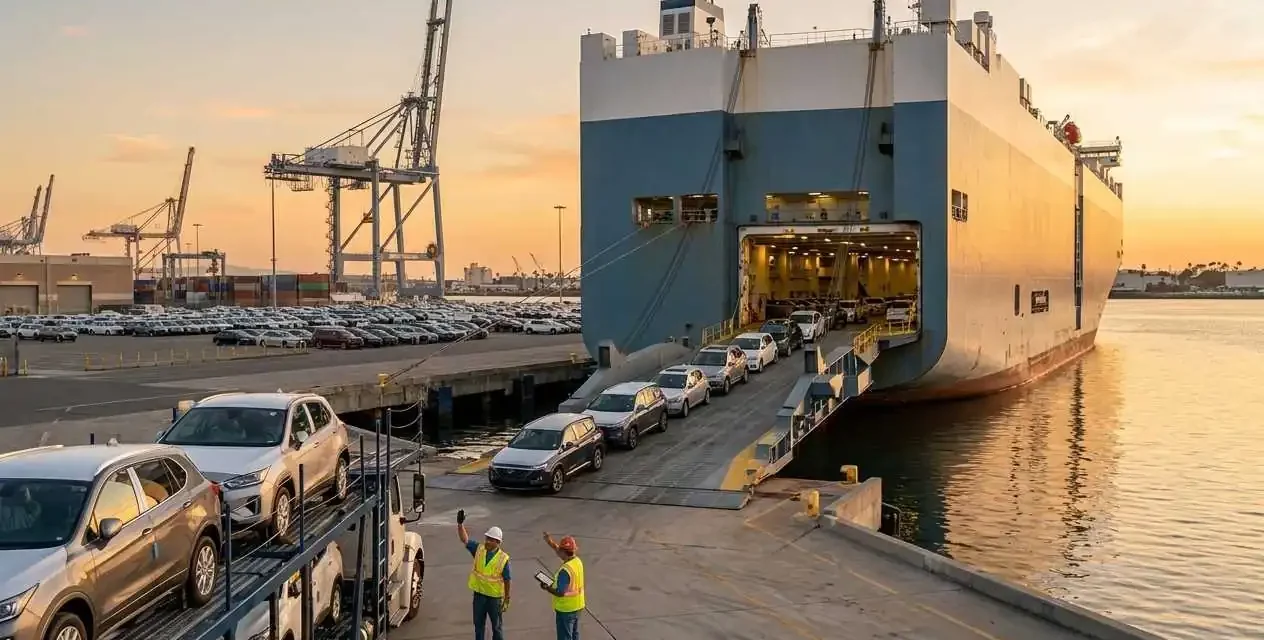
For the shipping option, include getting the car to the departure port, the ocean leg, temporary transportation, collection and arrival
administration.
For selling and buying, include preparing the old car for sale, handling the transaction, searching for a replacement, inspecting candidates and arranging transportation while you shop.
Also consider financing or ownership paperwork that needs attention in either scenario.
Keep this comparison in one document. Use the same categories and planning period for both choices. Otherwise, it is easy to compare a fully described shipping plan against an unrealistically simple idea of buying a car after landing.
Make sure you understand the service boundary
“Shipping the car” does not identify who handles every part of the journey.
Port to port service covers the ocean portion between ports. Door to port adds mainland transportation to the departure port for a Hawaii-bound move. Port to door combines the ocean journey from Hawaii with mainland transportation after arrival.
When comparing mainland-to-Hawaii car transport options, identify which of those services
your household needs. Car Shipping Hawaii offers port to port, door to port and port to door service between the mainland and Hawaii.
Ask where your responsibility begins and ends. That question is more useful than assuming every proposal includes the same handoffs.
Test the plan against a transportation gap
For each option, write down the first day you would be without your current car and the day you realistically expect to have dependable transportation again.
Selling can create a gap before departure and another while you search after arrival. Shipping can create a gap while the vehicle is in
transit.
Do not assume the buying gap is shorter simply because there is no ocean shipment attached to it. Your search may involve several
inspections or a change in requirements.
Likewise, do not make a shipping plan depend on an estimated date functioning as a firm promise. Arrival dates for the ocean leg are estimates, because the exact ship a car sails on cannot be predicted far ahead.
Treat buying after arrival as a project
If replacing the car looks promising, define the search before you move. List acceptable vehicle types, essential features and reasons
you would reject a candidate.
Decide who will inspect a vehicle and how you will manage transportation during the search. If financing is part of the plan, investigate the documentation you will need.
Avoid assuming that the first suitable listing will still be available when you land. Equally, avoid assuming that every local vehicle will be unsuitable.
The purpose of advance research is to make a measured decision possible, not to convince yourself that an unseen replacement is already secured.
Do not count the same benefit twice
A replacement may offer lower maintenance needs, different features or a better fit for your household. Keep those reasons separate.
For example, “newer,” “more dependable” and “less likely to need repairs” may describe overlapping expectations rather than three independent advantages. Ask what evidence supports each one.
Apply the same discipline to keeping your car. “I know its history” is useful information, but it does not prove that its upcoming maintenance will be minor.
This approach prevents enthusiasm for either option from turning a comparison into a justification written after the decision.
Leave room for the paperwork
Whichever option you choose, make administration part of the plan rather than an afterthought.
For a vehicle brought from another state, consult the destination county’s current out-of-state registration instructions before the car arrives, so the paperwork is ready when it does.
If buying after arrival, ask the appropriate county what applies to that particular transaction.
Do not assume a recommendation from a friend covers a different ownership arrangement or county. Use personal experiences to generate questions, then verify the answers with the responsible office.
Choose the option with manageable uncertainty
Shipping may make sense when your existing car suits your needs, its condition is understood and you can manage the transportation gap.
Selling and replacing may make sense when the car no longer fits your household or when you already intended to replace it for reasons unrelated to Hawaii.
If major facts remain unknown, write down the next piece of evidence you need: a mechanical assessment, confirmed parking information or a clearer replacement search.
The right decision is not the option with the fewest steps on paper. It is the one whose work, timing and uncertainty your household can reasonably manage.
Camilo Jaime is the founder of Car Shipping Hawaii and has spent 18 years in the car shipping business.